
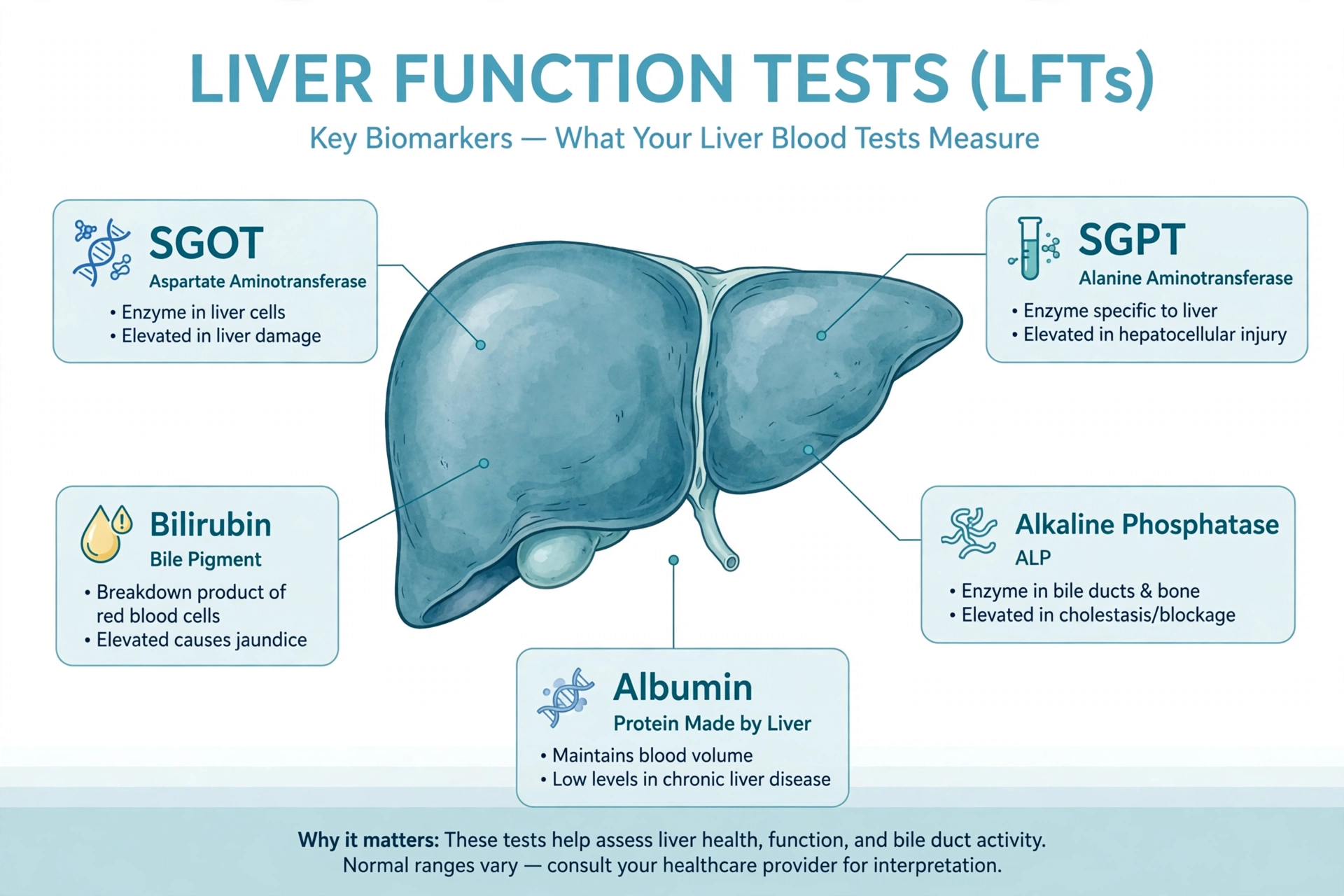
A Liver Function Test is not a single test — it is a panel of blood tests that together give a picture of how your liver is doing. When the report arrives with its alphabet soup of ALT, AST, ALP, bilirubin, and albumin, it can look intimidating. This guide explains what each marker measures in plain language. Only your doctor can interpret your results, but understanding the components will help you follow the discussion.
What Is the Liver, and Why Test It?
The liver is the body’s largest internal organ and its chemical processing plant. It filters blood, processes nutrients, produces proteins, stores energy, makes bile for digestion, and helps clear waste and toxins. Because it does so many jobs quietly, liver problems often cause no symptoms in the early stages — which is why doctors include LFT in routine health check-ups and order it when investigating fatigue, abdominal discomfort, or abnormal findings.
ALT and AST: The Liver Enzymes
ALT (alanine aminotransferase) and AST (aspartate aminotransferase) are enzymes involved in processing proteins. They are found mainly inside liver cells. When liver cells are irritated or damaged, these enzymes leak into the bloodstream, so elevated levels can signal that the liver is under stress.
- ALT is more specific to the liver than AST.
- AST is also found in heart, muscle, and other tissues, so a raised AST alone is less specific to the liver.
Mild, temporary elevations can occur for many reasons — including certain medications, alcohol, strenuous exercise, or fatty liver — and levels often return to normal. The pattern, the degree of elevation, and repeat readings over time are what matter, and your doctor reads these in context.
ALP and GGT: The Bile Duct Markers
ALP (alkaline phosphatase) is an enzyme found in the liver, bile ducts, and bone. Raised ALP can suggest that bile flow from the liver is obstructed, but because it also comes from bone, it can be elevated during bone growth (in children and teenagers) or bone conditions. Doctors often check it alongside other markers to pinpoint the source.
GGT (gamma-glutamyl transferase) is another enzyme concentrated in the liver and bile ducts. It is often ordered together with ALP: if both are raised, it points more toward a liver or bile duct source; if ALP is raised but GGT is normal, the source may be bone. GGT can also be raised by alcohol use and certain medications.
Bilirubin: Total and Direct
Bilirubin is a yellow pigment produced when old red blood cells are broken down. The liver processes bilirubin and excretes it into bile. The report usually shows:
- Total bilirubin — the overall amount in the blood.
- Direct (conjugated) bilirubin — the portion the liver has processed.
When bilirubin builds up, it can cause the yellowing of skin and eyes known as jaundice. Bilirubin can rise because of liver problems, bile duct obstruction, or increased breakdown of red blood cells — distinguishing between these is your doctor’s job, often with the help of the other LFT markers.
Albumin and Total Protein: The Liver’s Output
The liver manufactures most of the protein circulating in your blood, including albumin, which keeps fluid in the bloodstream and carries hormones and medicines. Total protein measures albumin plus other blood proteins (globulins).
Low albumin can suggest that the liver’s manufacturing capacity is reduced, but it can also result from poor nutrition, kidney loss of protein, or chronic inflammation. Because albumin changes slowly (it lasts about three weeks in the blood), it reflects longer-term liver function rather than day-to-day changes.
Typical Reference Ranges
Ranges vary by laboratory and method — always use the range printed on your report. As a general orientation, commonly used adult ranges are approximately:
| Marker | Typical adult range |
|---|---|
| ALT | 7 – 56 U/L |
| AST | 10 – 40 U/L |
| ALP | 44 – 147 U/L |
| GGT | 9 – 48 U/L |
| Total bilirubin | 0.1 – 1.2 mg/dL |
| Direct bilirubin | 0.0 – 0.3 mg/dL |
| Albumin | 3.5 – 5.5 g/dL |
| Total protein | 6.0 – 8.3 g/dL |
These are approximate and illustrative. Slight deviations do not automatically indicate disease, and your doctor interprets values alongside your history, medications, and other tests.
Reading the Pattern, Not Just the Numbers
Doctors rarely act on a single value. They look at which markers are raised together — for example, ALT and AST rising together suggests liver cell irritation, while ALP and GGT rising together suggests a bile flow issue. They also consider how high the values are, whether they are rising or falling on repeat tests, and what else is going on in your health. This pattern-reading is a clinical skill, which is why reports should always be discussed with your doctor rather than interpreted at home.
How to Prepare for the Test
- Fasting: LFT usually requires 8–12 hours of fasting (water is generally allowed). Follow the instructions given with your booking.
- Alcohol: Avoid alcohol for at least 24 hours before the test if possible, as it can temporarily affect liver enzymes.
- Medications and supplements: Many common medicines and herbal supplements can influence LFT. Tell your doctor what you take.
- Exercise: Very strenuous exercise shortly before the test can mildly raise some enzymes.
Medical Disclaimer
This article is for general information only and is not medical advice. Reference ranges vary between laboratories, and liver function reports must be interpreted by your doctor in the context of your overall health. Do not start, stop, or change any medication based on this article. If you have questions about your LFT report, please consult your doctor.
Book Your Liver Function Test at Aura Care Centre
Aura Care Centre offers liver function testing with accurate, timely reports, plus home blood sample collection across Gurugram. Visit our branches in Sector 38, Sector 15, or Sector 51 — or call +91 81301 01433 / message us on WhatsApp to book your test or arrange a home collection.