
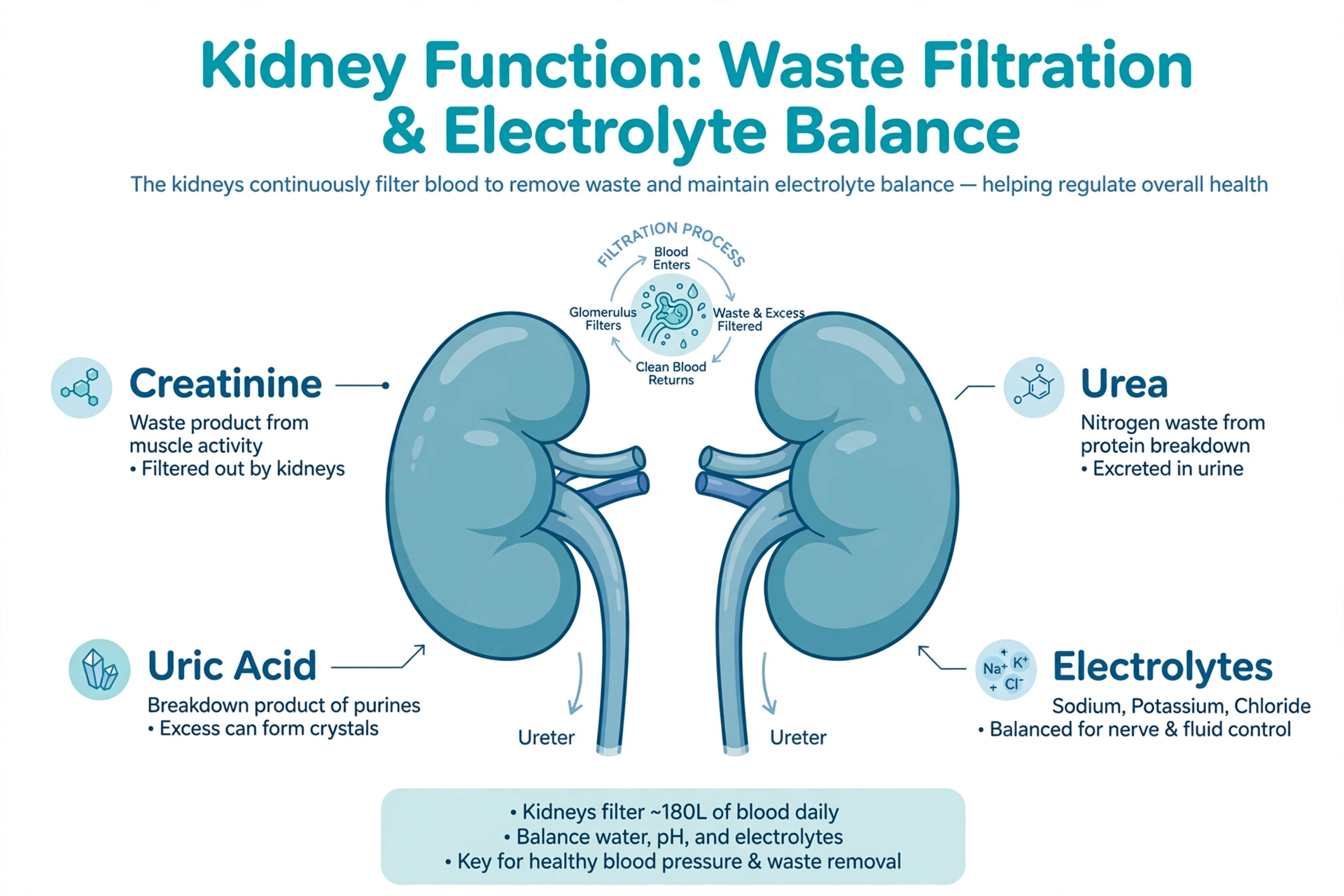
The kidneys work quietly in the background — filtering about 180 litres of blood every day, balancing fluids and salts, and clearing waste. Because kidney problems often develop without obvious symptoms, doctors rely on blood tests to check how well they are working. The Kidney Function Test (KFT), also called a renal function panel, is a group of blood tests that together assess the kidneys. Here is what each marker on your report means, in plain language.
What Do the Kidneys Do?
Beyond making urine, the kidneys filter waste products from the blood, balance electrolytes (sodium, potassium), regulate blood pressure, manage the body’s fluid levels, and help keep bones healthy. When they filter less efficiently, waste products build up in the blood — and that is exactly what the KFT markers detect.
Creatinine: The Key Waste Marker
Creatinine is a waste product formed from the normal breakdown of muscle tissue. Healthy kidneys filter it out of the blood at a steady rate, so the blood level stays within a narrow range.
Because creatinine comes from muscle, levels naturally differ between people — they tend to be higher in muscular individuals and men, and lower in women and older adults with less muscle mass. A rising creatinine level over time is one of the most watched signs that kidney filtration may be declining. Your doctor will always interpret it in the context of your body size, age, and previous readings.
Blood Urea / BUN: Protein Waste
Urea (reported as BUN — blood urea nitrogen in some labs) is the waste product left over when the body breaks down protein. Like creatinine, it is cleared by the kidneys, so high levels can suggest reduced kidney function.
However, urea is influenced by more than the kidneys: a high-protein meal, dehydration, or bleeding in the digestive tract can raise it temporarily, while low protein intake or liver problems can lower it. Doctors therefore read urea alongside creatinine rather than on its own — the ratio between the two can offer additional clues.
eGFR: The Filtration Estimate
eGFR (estimated glomerular filtration rate) is a calculated number that estimates how much blood the kidneys filter per minute. It is derived from your creatinine level, age, and sex using a standard formula.
eGFR is reported in mL/min/1.73m², and as a rough guide:
- 90 or above is generally considered in the normal range
- 60–89 may indicate mildly decreased function, interpreted with other findings
- Below 60, persisting over time, generally indicates kidney disease and needs medical evaluation
A single eGFR reading is never the whole story — doctors look at trends across repeat tests, along with urine tests and blood pressure, before drawing conclusions.
Electrolytes: Sodium and Potassium
The kidneys are the body’s salt managers, so the KFT panel usually includes key electrolytes:
- Sodium helps control fluid balance and nerve function. Both low and high levels can cause symptoms, and the kidneys play the central role in keeping it steady.
- Potassium is critical for heart and muscle function. Kidneys excrete excess potassium, so when they underperform, potassium can rise to risky levels — one reason doctors monitor it closely in kidney patients.
Some panels also include chloride and bicarbonate, which reflect the blood’s acid-base balance — another job the kidneys handle.
Uric Acid: Often Included
Uric acid is the waste product of purine breakdown (purines come from certain foods and from the body’s own cell turnover). It is cleared partly by the kidneys. High uric acid is best known for its link with gout, but it is also commonly included in kidney panels because the kidneys handle its excretion. Levels can be influenced by diet, alcohol, and some medications.
Typical Reference Ranges
Ranges vary by laboratory — always use the range printed on your report. As a general orientation, commonly used adult ranges are approximately:
| Marker | Typical adult range |
|---|---|
| Creatinine (men) | 0.7 – 1.3 mg/dL |
| Creatinine (women) | 0.6 – 1.1 mg/dL |
| Blood urea nitrogen (BUN) | 7 – 20 mg/dL |
| eGFR | 90+ mL/min/1.73m² |
| Sodium | 135 – 145 mEq/L |
| Potassium | 3.5 – 5.0 mEq/L |
| Uric acid (men) | 3.4 – 7.0 mg/dL |
| Uric acid (women) | 2.4 – 6.0 mg/dL |
These are approximate and illustrative only. A value slightly outside the range does not automatically mean kidney disease — hydration, diet, muscle mass, and medications all play a role, and your doctor interprets the full picture.
Why Doctors Look at Trends
Kidney function changes slowly, so a single test is a snapshot while repeat tests reveal the direction. A creatinine that has crept upward over a year tells a different story from one that has been stable for years, even if both sit near the top of the range. This is another reason doctors often repeat the KFT rather than acting on one reading — and why comparing reports from the same laboratory over time is valuable.
How to Prepare for the Test
- Fasting: Often required for 8–12 hours, especially if the KFT is part of a larger panel. Follow your booking instructions.
- Hydration: Drink normal amounts of water; avoid arriving dehydrated, as it can temporarily raise urea and creatinine.
- Medications: Some common medicines (including certain painkillers and blood pressure drugs) affect kidney markers. Inform your doctor about everything you take.
- Exercise and diet: Avoid very heavy exercise and unusually large protein-heavy meals just before the test.
Medical Disclaimer
This article is for general information only and is not medical advice. Reference ranges vary between laboratories, and kidney function reports must be interpreted by your doctor in the context of your overall health. Do not start, stop, or change any medication based on this article. If you have questions about your KFT report, please consult your doctor.
Book Your Kidney Function Test at Aura Care Centre
Aura Care Centre offers kidney function testing with accurate, timely reports, plus home blood sample collection across Gurugram. Visit our branches in Sector 38, Sector 15, or Sector 51 — or call +91 81301 01433 / message us on WhatsApp to book your test or arrange a home collection.