
Every monsoon season, dengue cases rise across Gurugram and the NCR. When someone develops a high fever during these months, doctors often order a dengue NS1 antigen test — usually in the first few days of illness. This article explains what the test detects, when it is most useful, and how it differs from the antibody tests that are done later in the illness.
What Is Dengue
Dengue is a viral infection spread by the bite of infected Aedes mosquitoes, which typically bite during the daytime. It is common in tropical and subtropical regions, including much of India. Most infections cause a flu-like illness, but a small proportion can progress to severe dengue, which requires hospital care.
The early symptoms of dengue — sudden high fever, severe headache, pain behind the eyes, joint and muscle pain, nausea, and skin rash — overlap with many other monsoon fevers, including malaria, typhoid, and chikungunya. This is why laboratory testing matters: clinical symptoms alone cannot reliably distinguish dengue from other causes of fever.
What the NS1 Antigen Test Detects
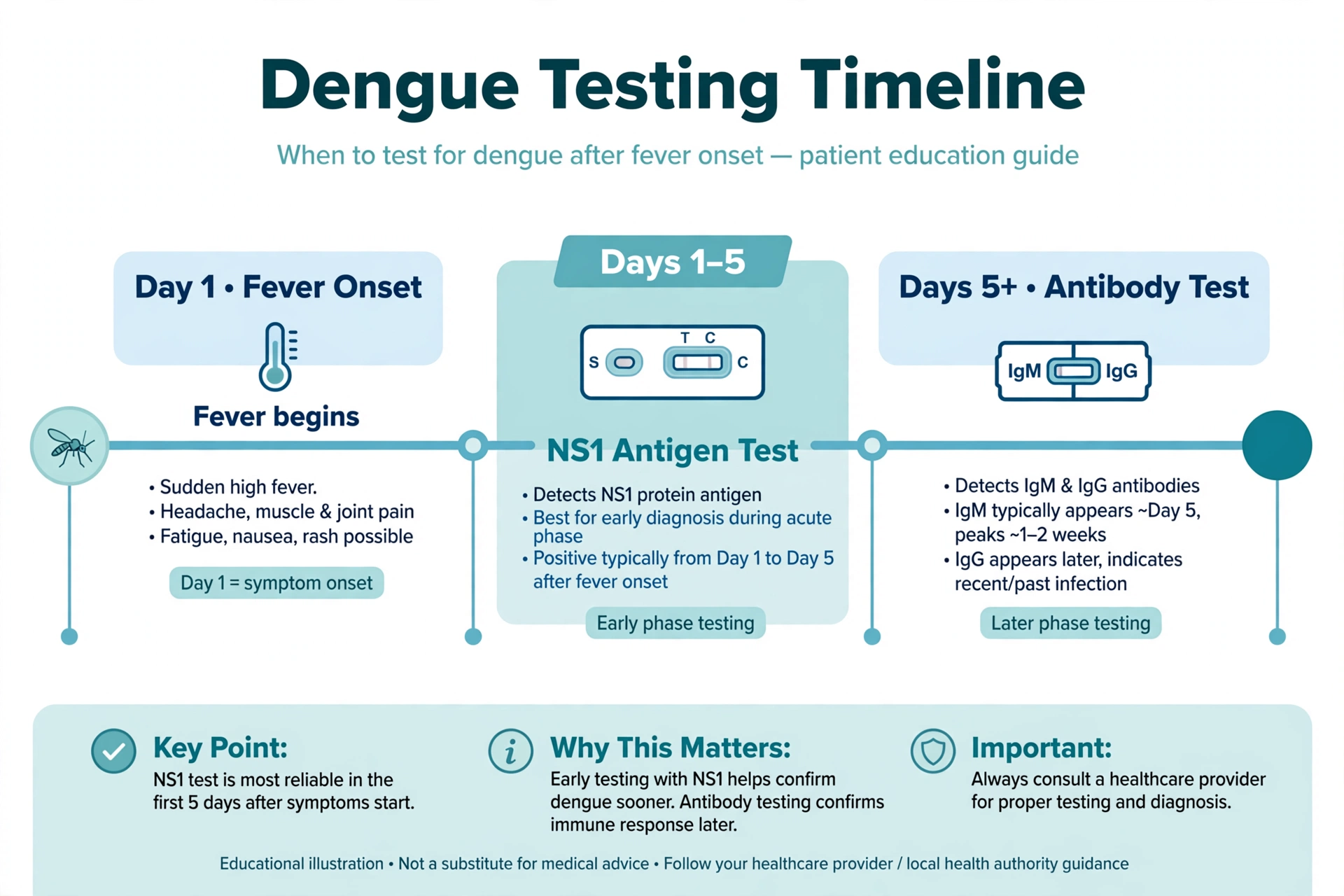
NS1 stands for “non-structural protein 1.” It is a protein produced by the dengue virus inside the body during active infection. The NS1 antigen test looks for this viral protein directly in the blood — in other words, it detects the virus itself, not the body’s immune response to it.
This is an important distinction. Because NS1 is present while the virus is actively circulating, the test is most useful in the early phase of illness — generally from the first day of fever up to about day 5 to 7. After that window, NS1 levels fall as the immune system clears the virus, and antibody tests become more informative.
When Doctors Order the NS1 Test
A doctor may order an NS1 test when a patient presents with:
- Sudden high fever during or just after the monsoon season
- Fever accompanied by body ache, headache, or pain behind the eyes
- A falling platelet count or other blood findings that raise suspicion
- Known dengue activity in the patient’s neighbourhood
The test is typically ordered in the first few days of fever, when it is most likely to give a reliable result. If a patient comes in later — say, after a week of fever — the doctor may prefer antibody tests (IgM and IgG) instead, or order both.
NS1 vs IgM/IgG: What’s the Difference
It helps to understand the two families of dengue tests:
- NS1 antigen test — detects a viral protein; best in the first 5–7 days of fever. A positive result indicates active dengue infection.
- IgM antibody test — detects the body’s early immune response; becomes positive around day 4–5 of fever and can stay positive for several weeks. Useful when the patient presents later.
- IgG antibody test — detects longer-lasting antibodies; indicates past infection or, when rising, a current or recent secondary infection.
In practice, doctors often order NS1 together with IgM/IgG as a combined dengue panel, so that the illness is covered regardless of which day of fever the patient is on. A negative NS1 result early in the illness does not always rule out dengue — if suspicion remains high, the doctor may advise repeating the test or adding antibody testing.
How the Test Is Done
The NS1 test requires a standard blood sample, usually drawn from a vein in the arm. No special preparation or fasting is required. Results are typically available the same day, which is important because early confirmation helps the doctor monitor the patient appropriately.
Some labs offer rapid NS1 card tests (results in under an hour), while others use ELISA-based methods. Your doctor will choose based on the clinical situation.
What the Result Means — and Doesn’t Mean
A positive NS1 result means dengue virus protein was detected and supports a diagnosis of active dengue infection. The doctor will then focus on monitoring — particularly platelet counts and warning signs — and advise on fluid intake, rest, and follow-up.
A negative result means no NS1 protein was detected in that sample. It does not completely exclude dengue, especially if the test was done very early (day 1) or after the NS1 window has passed. Clinical judgment and repeat or additional testing guide the next steps.
Importantly, the NS1 test does not predict how severe the illness will be. Severity depends on many factors, and monitoring for warning signs — severe abdominal pain, persistent vomiting, bleeding, extreme fatigue, or difficulty breathing — is essential regardless of test results. These warning signs warrant immediate medical attention.
Preventing Dengue
Since dengue spreads through mosquito bites, prevention focuses on the mosquito:
- Eliminate stagnant water around the home (coolers, plant trays, open containers) where Aedes mosquitoes breed
- Use mosquito repellents and nets, especially during the day
- Wear clothing that covers arms and legs during peak mosquito hours
- Keep surroundings clean during and after the monsoon
When to See a Doctor
If you develop a sudden high fever during the monsoon months — especially with body ache, headache, or rash — consult a doctor promptly rather than waiting it out. Early testing and monitoring lead to better outcomes, and most dengue cases are managed well with timely medical care.
Medical Disclaimer: This article is for general information only and is not medical advice. Fever during monsoon season can have many causes. Only a qualified doctor can decide which tests are appropriate and interpret the results in your clinical context. Seek prompt medical care for high fever or any warning signs.
Book your test at Aura Care Centre — Dengue NS1 antigen testing (alone or as part of a fever profile) is available at our Sector 38, Sector 15, and Sector 51 centres in Gurugram, with same-day results and home sample collection available. Call or WhatsApp us on +91 81301 01433 to book.