Vitamin D and vitamin B12 deficiencies are among the most common nutritional deficiencies seen in India. Many people live with low levels for months or years without realising it, because the signs can be vague and easy to attribute to a busy lifestyle. A simple blood test can confirm whether your levels are low — but the decision to test should always come from a conversation with your doctor.
What Vitamin D Does in the Body
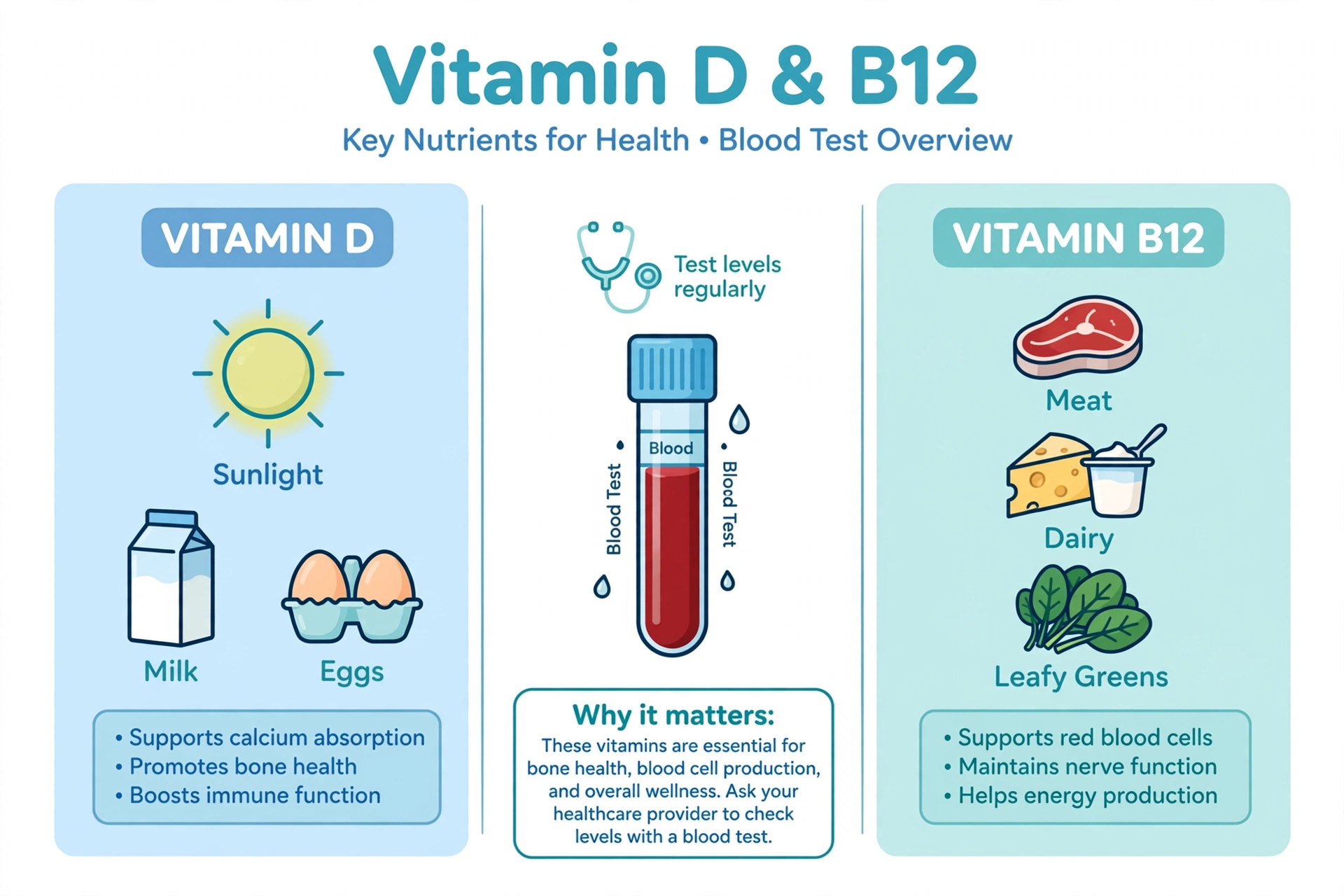
Vitamin D is best known for its role in bone health. It helps the body absorb calcium and phosphorus, which keep bones strong. Without enough vitamin D, bones can become thin and fragile over time.
But vitamin D’s job doesn’t stop there. It also plays a role in muscle function and supports the immune system. Research continues into its wider effects, but the bone-health connection is the most firmly established.
The main natural source of vitamin D is sunlight on the skin. A smaller amount comes from food — oily fish, egg yolks, and fortified foods are among the few dietary sources. Because modern life keeps most of us indoors for long hours, deficiency is widespread even in sunny countries like India.
What Vitamin B12 Does in the Body
Vitamin B12 (cobalamin) is essential for healthy red blood cell formation, normal nerve function, and DNA synthesis. Without enough B12, the body can develop anaemia, and in prolonged deficiency, nerve-related symptoms can appear.
B12 comes almost entirely from animal-source foods — meat, fish, eggs, and dairy. This makes vegetarians and vegans more likely to develop low levels unless they use fortified foods or supplements under medical guidance. Older adults can also have difficulty absorbing B12 from food, even when their diet contains enough of it.
Common Signs People Associate with Low Levels
It is important to be careful here: the symptoms below are non-specific, meaning they can have many causes. Experiencing them does not mean you have a deficiency — only a blood test, interpreted by a doctor, can confirm that.
Signs often discussed in connection with vitamin D deficiency include:
- Persistent tiredness or low energy
- Bone or back pain
- Muscle weakness or cramps
- Frequent illness (possibly linked to immune function)
Signs often discussed in connection with vitamin B12 deficiency include:
- Fatigue and weakness
- Pale skin
- Tingling or numbness in the hands and feet
- Difficulty with balance or coordination
- Memory or concentration difficulties
- A sore or smooth-feeling tongue
If you notice a combination of these signs, especially if they persist, it is worth discussing with your doctor rather than self-diagnosing. Starting supplements on your own without testing can mask the real cause of your symptoms — and in the case of B12, high-dose folic acid can even mask B12 deficiency on blood counts while nerve damage progresses.
Who Is More Likely to Be Deficient
Certain groups are at higher risk for vitamin D deficiency:
- People who spend most of their day indoors with little sun exposure
- Those who consistently cover most of their skin when outdoors
- People with darker skin tones (more melanin reduces vitamin D production from sunlight)
- Older adults, whose skin synthesises vitamin D less efficiently
- People with conditions affecting fat absorption, since vitamin D is fat-soluble
For vitamin B12, higher-risk groups include:
- Vegetarians and vegans who do not consume fortified foods or supplements
- Adults over 50, who may absorb less B12 from food
- People who have had stomach or intestinal surgery
- Those with digestive conditions that affect absorption
- People on long-term use of certain medications (your doctor can advise)
How Testing Works
Testing for both vitamins is done through a simple blood sample. Vitamin D is typically measured as 25-hydroxyvitamin D, and B12 is measured directly in the blood. In some cases, a doctor may also order related tests — such as calcium, or a complete blood count — to get a fuller picture.
Fasting requirements vary by lab and by the combination of tests ordered. When you book, ask whether fasting is needed so you can prepare correctly.
Test results come with reference ranges, but interpretation is not always straightforward. Levels considered “insufficient” versus “deficient” can differ between guidelines, and what matters most is the clinical context — your symptoms, diet, sun exposure, and medical history. This is why results should always be reviewed with a doctor rather than read in isolation.
What Happens After the Test
If your levels are low, your doctor may recommend dietary changes, safe sun exposure, or supplements at an appropriate dose. Follow-up testing is sometimes advised to check whether levels have improved.
If your levels are normal but symptoms persist, that is also useful information — it helps your doctor look in other directions. A test that rules something out is just as valuable as one that confirms it.
How Often Should You Test
There is no universal schedule. People at ongoing risk — for example, strict vegetarians for B12, or those with a history of deficiency — may be advised to recheck periodically. For most healthy adults without risk factors, one-off testing on a doctor’s advice is usually enough. Your doctor can recommend a sensible interval based on your situation.
Medical Disclaimer: This article is for general information only and is not medical advice. Do not start, stop, or change any supplement or medication based on this article. Only a qualified doctor can advise whether testing or treatment is appropriate for you.
Book your test at Aura Care Centre — Vitamin D and B12 blood tests are available at our Sector 38, Sector 15, and Sector 51 centres in Gurugram, with home sample collection available across the city. Call or WhatsApp us on +91 81301 01433 to book your slot.