
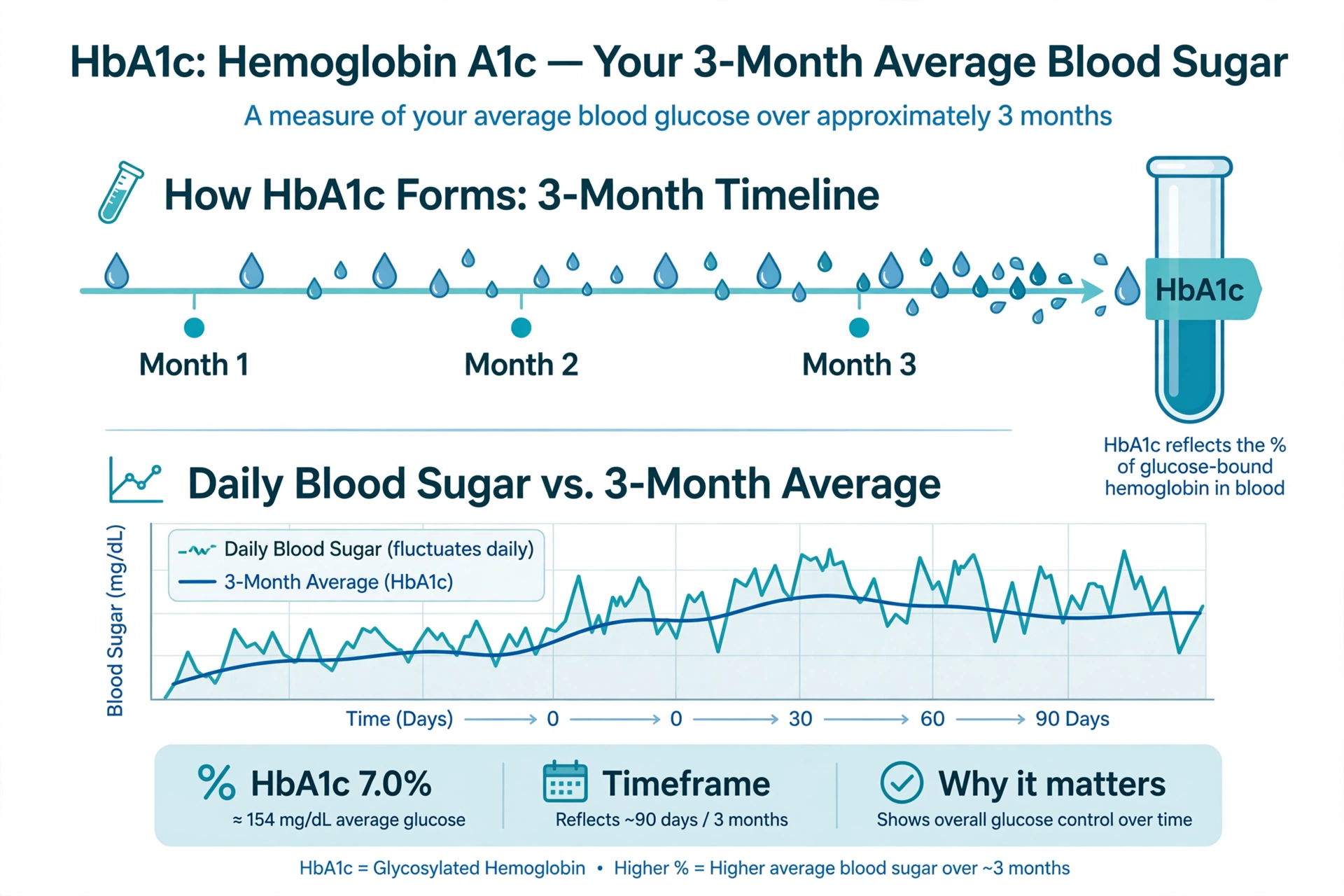
Most people with diabetes are familiar with pricking their finger to check blood sugar. The HbA1c test is different — instead of a snapshot of one moment, it reflects your average blood sugar over the past two to three months. It is one of the most important markers doctors use to assess long-term sugar control, and understanding it can help you have better conversations about your health.
What Is HbA1c?
HbA1c stands for glycated haemoglobin. Haemoglobin is the protein in red blood cells that carries oxygen. When sugar (glucose) circulates in the blood, some of it naturally attaches to haemoglobin — a process called glycation. The more sugar in the blood, the more of it sticks to haemoglobin.
Red blood cells live for about 120 days, so the percentage of glycated haemoglobin reflects the average blood sugar level over roughly the past two to three months. The result is reported as a percentage: for example, an HbA1c of 7% means 7% of your haemoglobin has sugar attached to it.
How It Differs from Fasting and Post-Meal Sugar Tests
Daily sugar tests and HbA1c answer different questions:
- Fasting blood sugar shows your sugar level at one moment, after an overnight fast.
- Post-prandial (PP) sugar shows the level about two hours after a meal.
- Random sugar shows the level at whatever time the sample is taken.
- HbA1c shows the average over months, smoothing out the daily ups and downs.
This is why doctors value HbA1c: a person can have a normal fasting reading on the day of testing but still have high average levels over time — or vice versa. The two types of tests complement each other rather than replacing one another.
Understanding the Percentages
The American Diabetes Association (ADA) uses the following widely accepted cut-offs for adults. Your doctor interprets them in your individual context:
| HbA1c | General interpretation (ADA) |
|---|---|
| Below 5.7% | Normal |
| 5.7% – 6.4% | Prediabetes (higher risk range) |
| 6.5% or above | Diabetes range |
These are standard reference cut-offs, not a diagnosis by themselves — diagnosing diabetes involves clinical judgement and often repeat testing. Also note that target HbA1c goals for people already managing diabetes are set individually by the doctor, taking age, other conditions, and treatment into account.
To make the percentage more intuitive, laboratories sometimes report an estimated average glucose (eAG) alongside it. As a rough guide, an HbA1c of 7% corresponds to an estimated average glucose of about 154 mg/dL, and 8% to about 183 mg/dL. Your report may show this conversion directly.
What Can Affect the Result?
HbA1c is reliable for most people, but certain conditions can make it less accurate, because the test depends on normal red blood cells:
- Anaemia or recent blood loss can alter the result.
- Haemoglobin variants (such as thalassaemia trait or sickle cell trait) can interfere with some measurement methods.
- Kidney or liver disease may affect red blood cell lifespan.
- Pregnancy changes red blood cell dynamics, so doctors interpret HbA1c differently during pregnancy.
- Recent blood transfusion can temporarily distort the reading.
If any of these apply to you, mention it to your doctor — they may rely more on other markers, such as fructosamine or continuous glucose monitoring, to assess your sugar control.
How Often Is the Test Done?
For people managing diabetes, doctors commonly repeat the HbA1c test every three to six months to track whether treatment is working. For people without diabetes, it may be included in an annual health check-up or when the doctor wants to screen for blood sugar problems. The right frequency for you is something your doctor decides.
Preparing for the Test
One of the convenient features of HbA1c testing is that fasting is generally not required — you can give the sample at any time of day. It is a simple blood draw, and the result is usually available the same day. If your doctor has ordered other tests alongside it (such as fasting sugar or a lipid profile), those may have their own preparation requirements, so follow the instructions given for the full panel.
Small Changes, Big Picture
Because HbA1c reflects months of blood sugar levels, it responds to sustained habits rather than single days. Doctors often use it as a feedback tool: if the number moves in the right direction between visits, it suggests the overall plan — medication, diet, activity, sleep — is working. If it does not, it is a signal to review the plan with your doctor rather than a reason for alarm.
Medical Disclaimer
This article is for general information only and is not medical advice. HbA1c cut-offs and targets must be interpreted by your doctor in the context of your overall health. Do not change your medication, diet, or diabetes management plan based on this article. If you have questions about your report, please consult your doctor.
Book Your HbA1c Test at Aura Care Centre
Aura Care Centre offers HbA1c and complete diabetes profile testing with same-day reports, plus home blood sample collection across Gurugram. Visit our branches in Sector 38, Sector 15, or Sector 51 — or call +91 81301 01433 / message us on WhatsApp to book your test or arrange a home collection.